
Laminar Flow Hood IQ/OQ/PQ Protocol
Laminar flow hoods are core equipment for clean production in the pharmaceutical, biological products and other industries, mainly used to maintain high cleanliness environments such as A/B grade locally. Its verification must strictly follow China's "Good Manufacturing Practice for Pharmaceutical Products (Revised in 2010)" (GMP) and the ISO series of guidelines (such as ISO 14644 Clean Rooms and Controlled Environments, ISO 9001 Quality Management System). Ensure that the entire life cycle of the equipment complies with the "Quality by Design (QbD)" principle and the "Process Analysis Technology (PAT)" concept. The following is a full-process verification plan for DQ (Design Approval), SAT (Field Acceptance Test), IQ (Installation Approval), OQ (Operational Approval), and PQ (Performance Approval) formulated in accordance with regulatory requirements, providing practical technical basis for the compliant use of laminar flow hoods.
I. Core Concept of Laminar Flow Hood
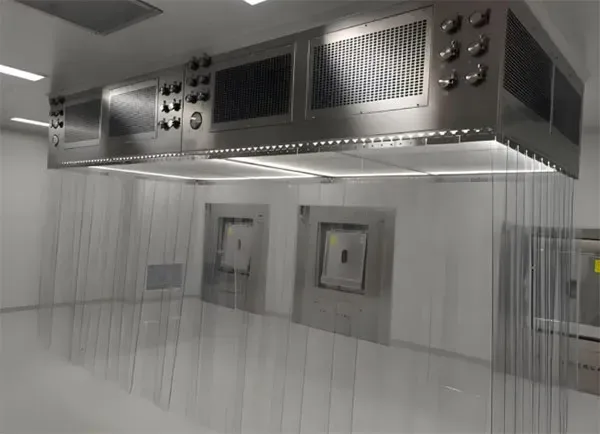
A laminar flow hood is a local‑air purification device. It draws ambient air for pre‑treatment through pre‑filter and medium‑efficiency filter, followed by deep purification via HEPA (High‑Efficiency Particulate Air) filter. Clean air is discharged in a uniform laminar pattern (parallel airflow streamlines without eddy currents), creating a locally high‑cleanliness environment within the covered zone.
Its core function is to control particulate and microbial contamination in localized spaces. It is widely adopted in cleanliness‑sensitive industries including pharmaceuticals, biological products, medical devices, electronics and semiconductors. It is especially suitable for Grade A/B core operating zones for sterile drug manufacturing, such as filling, lyophilizer feeding, sterile dispensing and other processes.
Based on installation methods, laminar flow hoods are categorized into ceiling‑mounted type and mobile type. Key components consist of fan unit, filtration system (pre‑filter / medium‑efficiency filter / HEPA filter), plenum chamber, airflow diffuser plate and control system. To guarantee purification performance, strict validation shall be performed to verify critical indicators such as cleanliness level, airflow pattern and operational stability comply with regulatory and process requirements.
I. Regulatory Basis for Validation:
Before conducting validation, it is necessary to identify the key regulations and standards to ensure that validation activities are compliant and scientifically sound, as shown in the table below:
| Category | Key Regulations / Standards | Key Requirements |
|---|---|---|
| China GMP | 1. China GMP (2010 Revision) main text & appendices (e.g. Sterile Products, Active Pharmaceutical Ingredients) 2. GMP Guideline for Pharmaceutical: Sterile Products 3. Pharmaceutical Data Management Specification | - Equipment design shall meet requirements of "non‑product‑contaminating, easy‑to‑clean and disinfect" - Equipment in clean zones shall be validated for airflow, cleanliness and microbial control performance - Data shall be complete and traceable; deviations shall follow closed‑loop management |
| ISO Guidelines | 1. ISO 14644‑1: Cleanrooms and associated controlled environments — Part 1: Classification of air cleanliness 2. ISO 14644‑3: Test and monitoring 3. ISO 14664‑1: Design and operation of biological cleanrooms 4. ISO 9001:2015 Quality management systems | - Cleanliness classification complies with ISO 14644‑1 (Grade A/B corresponds to ISO 5 / ISO 7) - Test methods including airflow visualization, air velocity and pressure difference shall comply with ISO 14644‑3 - Microbial monitoring shall satisfy product quality risk‑control requirements |
II. Phased Validation Process
2.1 Pre-Validation Risk Assessment:
Prior to initiating validation, the risk matrix method (probability of occurrence × severity of impact) must be used to identify potential risks during the laminar flow cabinet validation process and to develop targeted control measures to reduce the risk of validation deviations.
| Risk Points | Risk Level | Control Measures |
|---|---|---|
| Missing key URS clauses in design documents | High | Set‑up cross‑functional review team (Quality, Engineering, Production) during DQ phase. Check design documents against URS item‑by‑item, generate and sign review records. |
| HEPA installation leakage resulting in non‑conformant cleanliness | High | Strictly perform PAO leak test in IQ phase with scan speed ≤5cm/s. Reseal leakage points immediately and retest. |
| Uncalibrated validation instruments leading to distorted data | Medium | Verify calibration certificates of all instruments before validation; use instruments within valid calibration period. Keep copies of calibration records for key instruments (e.g. particle counter). |
| Mismatch between simulated load and actual production in PQ phase | Medium | Production department provides actual production load list (including fixture dimensions & weight). Arrange layout at 1:1 simulation for PQ testing. |
2.2 Training of Validation Personnel
All personnel involved in validation must undergo specialized training and pass an assessment to ensure they possess the necessary professional competence and operational skills. The training content and assessment results must be documented and archived.
| Trainees | Training Content | Assessment Method |
|---|---|---|
| Validation Team Leader | Validation protocol approval process, deviation handling, report compilation | Theoretical examination + protocol interpretation defense |
| Operator | Equipment‑operation SOP, test instrument usage, sampling methods | Practical assessment + written theoretical test (passing score: 80 points) |
| Quality Supervisor | GMP validation regulations, data integrity requirements, on‑site supervision key points | Regulation test + on‑site supervision simulation |
2.3 Validation Document Management
Establish a validation document control system to ensure that all validation activities are traceable; document management must comply with GMP data integrity requirements.
| Document Category | Management Requirements |
|---|---|
| Validation Protocol | Drafted under the lead of the engineering department, countersigned by quality and production departments, and takes effect upon approval by the quality responsible person. |
| Raw Records | Filled in controlled forms with true, timely and accurate data. No erasure allowed. If correction is needed, strike‑through, sign and date the revision. |
| Validation Report | Prepared based on raw records, including validation objective, scope, results, conclusion and deviation analysis. Approval procedure is identical to that of validation protocol. |
| Archived Documents | Within 15 working days after validation completion, organize and archive protocols, records, reports, calibration certificates, etc., and store them in the equipment filing cabinet. |

III. Phased Validation Process
Phase 1:
DQ (Design Qualification)—Verification of “Design Compliance” Core Objective: Prior to equipment manufacturing or following procurement, verify that the laminar flow hood design (including hardware, software, and system integration) complies with the User Requirements Specification (URS), China GMP, and ISO standards, thereby mitigating operational risks caused by design defects at the source.
1.1 Verification of Inputs
① The approved “User Requirements Specification (URS)” (which must specify key parameters such as cleanliness class, air velocity, airflow direction, control system, and materials);
② Design documents provided by the supplier (e.g., equipment drawings, airflow simulation reports, filtration system design proposals, electrical schematics, and software functional specifications);
③ Regulatory standards such as the “Sterile Medicinal Products” appendix of China’s GMP and ISO 14644-1/3.
1.2 Validation Content and Methods
| Validation Item | Validation Method | Acceptance Criteria (Example) |
|---|---|---|
| Consistency Review of URS and Design Documents | Compare key requirements of design documents against URS item‑by‑item (e.g. cleanliness, air velocity, material) | Design documents cover 100% of key URS clauses without substantial deviation |
| Regulatory Compliance Review | Check whether design complies with China GMP (e.g. material for clean‑in‑place, disinfection, non‑shedding) and ISO 14644‑1 | ‑ Material: 316L stainless steel (product‑contact surface), comply with GMP requirement of "no reaction with product" ‑ Cleanliness design: Grade A corresponds to ISO 5 (static ≤3520 particles/m³, 0.5μm) |
| Filtration System Design Review | Confirm selection, installation method and replacement cycle design of pre‑filter / medium‑efficiency filter / HEPA filter | ‑ HEPA efficiency ≥99.97% for 0.3μm particles, comply with ISO 14644‑3 ‑ PAO aerosol leak‑test port reserved for subsequent IQ/OQ validation |
| Airflow Design Review | Review airflow simulation report (e.g. CFD simulation), verify airflow uniformity and freedom from eddy currents | Airflow simulation shows uniform air velocity (deviation ≤±20%), no local eddy currents, vertical downward airflow within laminar flow hood coverage area |
| Control System Design Review | Check PLC / touch‑screen function design (parameter setting, alarm, data recording) | ‑ Real‑time monitoring for air velocity, temperature‑humidity and differential pressure; data storage ≥3 years (meet GMP data integrity requirements) ‑ Audio‑visual alarm triggered when air velocity is abnormal (e.g. lower than 0.36m/s) |
1.3 Verification of Output
① The approved “Laminar Flow Hood Design Qualification Report (DQ Report)”;
② Design deviation records (if any) and corrective actions (subject to approval by the Quality Department).
Phase 2: SAT (Site Acceptance Test) — Verifying “Delivery Conformity”
Core Objective: After the equipment arrives on-site, conduct unpacking inspections, component verification, and preliminary functional tests to confirm that the delivered equipment conforms to the design documents, identify any damage or shipping errors that may have occurred during transportation or manufacturing, and lay the foundation for subsequent installation and commissioning.
2.1 Verify Inputs
① Approved DQ report;
② Purchase contract, as well as the “Packing List,” “Equipment Certificate of Conformity,” and “Operating Manual” provided by the supplier;
③ Design documents (such as a parts list and electrical schematics).
2.2 Validation Content and Methods
| Validation Item | Validation Method | Acceptance Criteria |
|---|---|---|
| Completeness Check of Accompanying Documents | Check packing list against actual documents (operation manual, calibration certificates, HEPA filter certificate) | Documents are complete and comply with procurement contract requirements; third‑party test report shall be provided for HEPA filter (efficiency ≥99.97%) |
| Equipment Appearance & Component Inspection | Visual inspection of equipment surface (no scratches, corrosion); verify model numbers of components such as fans, filters and sensors | ‑ Appearance: Clean‑zone surface is smooth, no dead corners, no dents or coating peeling ‑ Components: Model numbers consistent with design documents, no missing or damaged parts |
| Preliminary Function Test | Power‑on test for fan start‑stop, control panel operation and alarm functions (e.g. manually trigger low air‑velocity alarm) | ‑ Fan runs stably without abnormal noise (measured ≤65dB(A), meets clean‑zone environmental requirements) ‑ Control panel responds normally; alarm trigger response time ≤10s |
3.2 Validation Content and Methods
| Validation Item | Validation Method | Acceptance Criteria |
|---|---|---|
| Installation Environment Confirmation | Test cleanliness, temperature and humidity of installation area (shall meet operating‑environment requirements for laminar flow unit) | ‑ Installation area cleanliness ≥ Grade D (ISO 8); temperature 18‑26℃, humidity 45‑65% (comply with GMP clean‑zone requirements) |
| Equipment Positioning & Fixation Confirmation | Refer to installation drawings; measure installation position and levelness with spirit level | Deviation of installation position vs drawing ≤ ±5mm; levelness deviation ≤0.1°/m |
| Piping & Electrical Connection Confirmation | Check supply‑air / return‑air duct connections (pressure decay leak‑test); test electrical earthing resistance | ‑ Piping tightness: pressure decay ≤5%/h @ test pressure 0.5kPa ‑ Earthing resistance ≤4Ω (compliant with electrical‑safety standards) |
| HEPA Filter Installation Confirmation | 1. Visual inspection for HEPA mounting sealing (no gaps); 2. PAO leak‑test for HEPA integrity | ‑ PAO scan efficiency ≥99.97%, no visible leakage points (ISO 14644‑3 compliant) ‑ Mounting frame free of deformation; sealing gasket / sealant without peeling or gaps |
| Instrument Calibration Confirmation | Check calibration certificates for anemometer, differential‑pressure gauge, temperature‑humidity sensors | All instruments are within valid calibration period; calibration laboratory holds CNAS accreditation |
3.3 Verification of Output
① Approved “Laminar Flow Hood Installation Qualification Report (IQ Report)”;
② Records of installation deviations (e.g., piping leaks) and corrective actions (e.g., retesting after resealing).
Phase 4: OQ (Operational Qualification) — Verification of “Operational Stability”
Core Objective: Under no-load conditions, verify that the laminar flow hood’s operating parameters (air velocity, airflow, control system, etc.) consistently meet design requirements and that its functions (alarms, cleaning and disinfection, etc.) operate normally, thereby establishing the prerequisites for Performance Qualification (PQ).
4.1 Verification of Inputs
① Approved IQ report;
② “Laminar Flow Hood Operating Procedures (SOP)” and “Cleaning and Disinfection Procedures (SOP)”;
③ ISO 14644-3 (Airflow Testing Methods) and the Appendix on “Sterile Medicinal Products” in China’s GMP.
4.2 Validation Content and Methods
| Validation Item | Validation Method | Acceptance Criteria (Example) |
|---|---|---|
| Air Velocity & Uniformity Confirmation | Distribute measuring points evenly on laminar flow working surface per ISO 14644‑3 (e.g. 9 points for 1m×1m area), test with calibrated anemometer | ‑ Average air velocity: 0.36‑0.54m/s (complies with GMP velocity requirements for Grade A/B laminar flow) ‑ Air velocity uniformity: velocity deviation ≤±20% at all measuring points |
| Airflow Direction & Visualization Confirmation | Observe airflow trajectory with smoke generator (glycerin smoke), record eddy current condition | Airflow covers entire working area with vertical downward direction, no obvious eddy current or airflow deflection. Photos / video records shall be kept. |
| Differential Pressure Confirmation | Test differential pressure between laminar flow unit interior and surrounding environment by differential pressure gauge (e.g. Grade A relative to Grade B) | Differential pressure ≥15Pa (meet GMP requirement for preventing external contamination intrusion); pressure fluctuation ≤±5Pa within continuous 24‑hour monitoring |
| Control System Function Confirmation | Test parameter setting (air velocity adjustment), data recording (auto‑storage), alarm function (HEPA blockage alarm) | ‑ Data record: auto‑record key parameters every 1min, support Excel export, data storage period ≥3 years ‑ Alarm function: Audio‑visual alarm trigger response time ≤10s when HEPA differential pressure reaches twice initial value |
| Illuminance Test Confirmation | Use calibrated lux meter, arrange 3 measuring points 0.8m above laminar flow working surface, measure illuminance and calculate average value | Average illuminance ≥300lx, illuminance deviation ≤±20% for each measuring point (satisfy clean‑zone operation lighting requirements) |
| Cleaning & Disinfection Procedure Confirmation | Perform cleaning & disinfection per SOP (e.g. 75% ethanol wiping), inspect surface residue by visual inspection and swab sampling | ‑ No visible stain after cleaning; microbial test result ≤1 CFU per swab ‑ Disinfectant residue complies with safety requirements for product‑contact surfaces |
4.3 Verification of Output
① The approved “Laminar Flow Hood Operational Qualification (OQ) Report”;
② Records of operational deviations (e.g., fluctuations in air velocity) and corrective actions (e.g., retesting after adjusting the fan speed).
Phase 5: PQ (Performance Qualification) — Verification of “Suitability for Production”
Core Objective: To verify, under simulated actual production conditions (or actual production conditions), that the laminar flow hood consistently meets product quality requirements (cleanliness, microbial control, etc.), thereby demonstrating the equipment’s suitability for actual production. PQ must cover “worst-case process conditions” (such as maximum load and longest operating cycle).
5.1 Input Validation
① Approved OQ report;
② “Laminar Flow Hood PQ Test Plan” (must specify simulated production load and sampling plan);
③ Product process documentation (e.g., production cycle, operating procedures), ISO 14644-1 (cleanroom testing), and China GMP “Sterile Drugs” (microbial monitoring).
5.2 Validation Content and Methods
| Validation Item | Validation Method | Acceptance Criteria (Example‑Grade A Zone) |
|---|---|---|
| Operating Parameter Confirmation Under Simulated Load & Dynamic Airflow Pattern | Place simulated product / tooling consistent with actual production load; continuously monitor air velocity, differential pressure, temperature‑humidity for 72 hours and observe airflow pattern | ‑ Air velocity: maintained at 0.36‑0.54m/s, fluctuation ≤±20% ‑ Differential pressure: ≥15Pa; temperature‑humidity complies with process requirements (e.g.18‑26℃) |
| Cleanliness Confirmation (Airborne Particles) | Sample under static (equipment running without operation) and dynamic (simulated operation) conditions according to ISO 14644‑1 | ‑ Static: ≤3520 particles/m³ @0.5μm, ≤29 particles/m³ @5.0μm ‑ Dynamic: ≤35200 particles/m³ @0.5μm, ≤290 particles/m³ @5.0μm |
| Microbiological Confirmation (Settling & Viable Airborne Micro‑organisms) | ‑ Settling microbes: place 90‑mm petri dishes (TSA medium) at working‑zone points for 0.5‑hour exposure ‑ Viable airborne microbes: use air sampler at 100L/min, sample volume 1000L | ‑ Settling microbes: Static ≤1 CFU/(Φ90mm·0.5h); Dynamic ≤5 CFU/(Φ90mm·0.5h) ‑ Viable airborne microbes: Static ≤1 CFU/m³; Dynamic ≤10 CFU/m³ |
| Microbial Challenge Test (For Sterile Products) | Simulate contamination with biological indicator (Bacillus atrophaeus spores), test isolation performance of laminar flow hood | Biological indicator recovery rate ≤0.1%, proving effective microbial‑contamination isolation capability of laminar flow unit |
| Production Process Simulation Confirmation | Produce 3 batches with placebo / simulated product following real‑world process; test product quality such as sterility and purity | All three simulated batches meet specified standards; no contamination or quality deviation caused by laminar‑flow system |
5.3 Verification of Output
① An approved “Laminar Flow Hood Performance Qualification Report (PQ Report)”;
② Records of performance deviations (e.g., microbial counts exceeding limits) and corrective actions (e.g., retesting after enhanced cleaning and disinfection);
③ A conclusion stating that the laminar flow hood is “ready for use.”
III. Post-Validation Management
① Revalidation Plan: Establish revalidation cycles in accordance with China GMP requirements to ensure ongoing equipment compliance:
1. Periodic Revalidation: Conducted once annually, with a focus on verifying cleanliness and microbial control parameters in PQ;
2. Post-Change Revalidation: IQ/OQ/PQ validation must be re-performed following equipment modifications (e.g., HEPA filter replacement, fan maintenance), changes to the production process (e.g., adjustments to product dosage forms, changes in production batch sizes), or replacement of critical components (e.g., control systems, sensors);
3. Revalidation Following Deviations: If significant deviations occur during validation or routine monitoring (e.g., persistent cleanliness non-compliance, abnormal airflow velocity fluctuations) and the cause of the deviation is related to equipment performance, targeted revalidation must be performed after the deviation has been corrected;
4. Revalidation Following Long-Term Decommissioning: If a mycology flow hood has been out of service for more than 6 months, IQ (Installation Qualification) and OQ (Operational Qualification) validations must be performed before it is put back into service; PQ validation may be required if necessary;
② Deviation and Change Management: All deviations identified during the validation process must be investigated, corrected, and closed out in accordance with the “Deviation Management SOP.” Equipment changes must be approved through the “Change Control Procedure” before implementation;
③ Record Retention: All validation documents (including DQ/SAT/IQ/OQ/PQ reports, deviation records, calibration certificates, etc.) must be retained for at least 5 years after the equipment is decommissioned, in accordance with GMP requirements, to ensure full traceability of data.